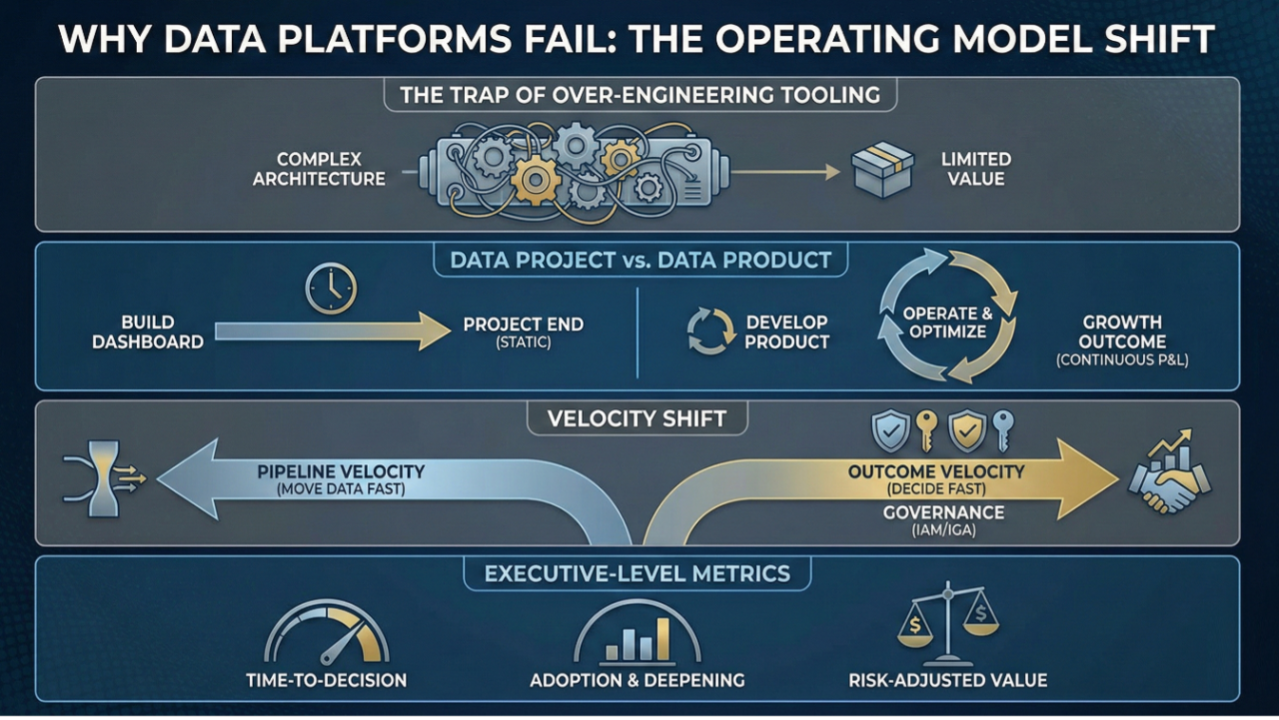

For years, expectations were straightforward. Senior data leaders were considered the most technically proficient. They handled architecture and key tooling decisions. When systems got complicated, the problem usually landed with them.
That part of the job still exists, but the role itself has shifted. The middle to senior leadership role in data disciplines is no longer just technical. It is Orchestration.
For many companies, the role has become less about being the primary builder and more about being an orchestrator. That coordination is the axis where data strategy and AI leadership intersect. Progress depends on how well teams collaborate. In many organizations, 𝐥𝐞𝐚𝐝𝐞𝐫𝐬𝐡𝐢𝐩 𝐡𝐚𝐬 𝐞𝐯𝐨𝐥𝐯𝐞𝐝 𝐟𝐫𝐨𝐦 𝐣𝐮𝐬𝐭 𝐛𝐞𝐢𝐧𝐠 𝐚 𝐛𝐮𝐢𝐥𝐝𝐞𝐫 𝐭𝐨 𝐛𝐞𝐢𝐧𝐠 𝐚𝐧 𝐢𝐧𝐭𝐞𝐠𝐫𝐚𝐭𝐨𝐫 𝐚𝐧𝐝 𝐜𝐥𝐨𝐬𝐞𝐫 𝐭𝐨𝐰𝐚𝐫𝐝𝐬 𝐛𝐞𝐢𝐧𝐠 𝐚𝐧 𝐞𝐜𝐨𝐬𝐲𝐬𝐭𝐞𝐦 𝐝𝐞𝐬𝐢𝐠𝐧𝐞𝐫, leveraging traditional tenets of adaptive leadership as the crucible for success.
The talent mix is also more diverse than before. Data Engineers, ML specialists, AI Agentic Product Teams, AI Workflow Engineer, Prompt Engineer & Model Tuner, LLM Integration Engineer, Autonomous Systems Developer, AI Reliability Engineer (AIRE), Pipeline Reliability Specialist, Vector Database Engineer, Inference Optimization Engineer, AI Performance Engineer, and Business Leaders often shape a single initiative. They rarely share the same timelines or priorities. Seamlessly aligning all that work and the diverse players has become a key role of leadership.
Influence also looks different. 𝐌𝐚𝐧𝐲 𝐝𝐞𝐜𝐢𝐬𝐢𝐨𝐧𝐬 𝐬𝐡𝐚𝐩𝐢𝐧𝐠 𝐚 𝐝𝐚𝐭𝐚 𝐩𝐥𝐚𝐭𝐟𝐨𝐫𝐦 𝐡𝐚𝐩𝐩𝐞𝐧 𝐚𝐜𝐫𝐨𝐬𝐬 𝐚 𝐦𝐚𝐭𝐫𝐢𝐱 𝐨𝐫𝐠𝐚𝐧𝐢𝐳𝐚𝐭𝐢𝐨𝐧. No single team controls the whole picture, and leaders often move work forward in teams they don’t directly manage.
Simultaneously, AI expectations are amplified at the executive level. Boards and executive teams are increasingly asking when AI will translate into measurable outcomes, while engineering teams still have to build things responsibly.
The role remains technical, but much of the work now sits in the middle, connecting strategy, teams, and delivery so that the organization can actually move forward. What do you think? #DataLeadership is #AdaptiveLeadership